IT
IT  EN
EN 
Analisi SWOT
Glossaries
| Term | Definition |
|---|---|
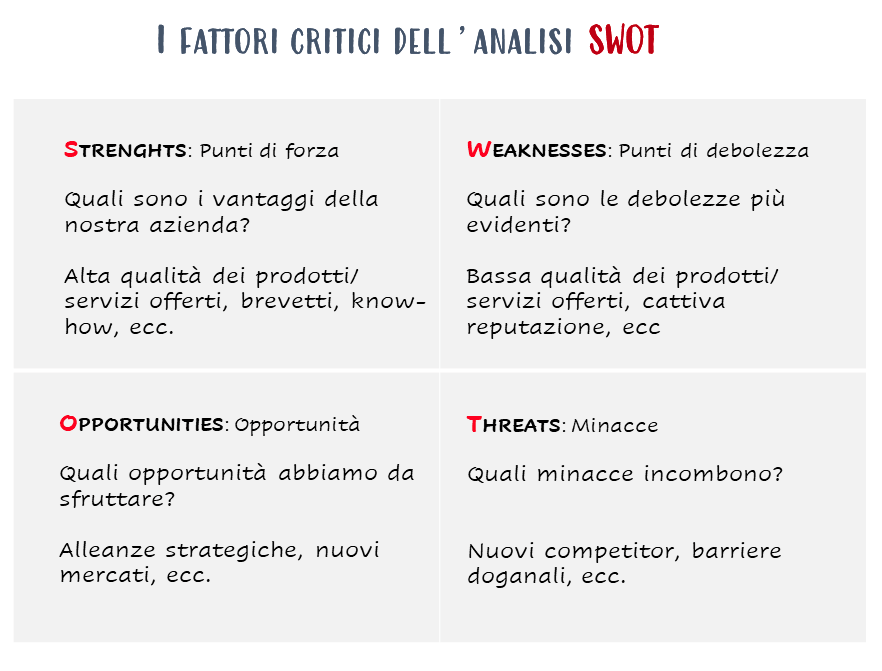
| Analisi SWOT | La valutazione dei punti di forza e di debolezza interni all’organizzazione e delle opportunità e minacce esterne; l’analisi SWOT è così chiamata dall’acronimo dei termini inglesi Strengths, Weaknesses, Opportunities, Threats che ne identificano le dimensioni. È una tecnica di valutazione delle strategie aziendali che, combinando l’analisi delle caratteristiche dell’ambiente sia esterno che interno all’azienda, aiuta la direzione aziendale a sviluppare specifici obiettivi e piani d’azione e a verificare la coerenza tra obiettivi strategici e azioni poste in essere nella gestione operativa, così da individuare eventuali aree che richiedono un intervento correttivo e, in alcuni casi, anche una revisione degli stessi obiettivi perseguiti. I fattori critici dell’analisi SWOTBasandosi sullo studio di quattro fondamentali fattori, l’analisi SWOT consente di tracciare il quadro in cui va a collocarsi una strategia, individuando quali forze e debolezze dell’impresa rispettivamente sostengono e condizionano la strategia adottata (analisi interna) e quali opportunità e minacce provengono dall’ambiente esterno (analisi esterna). L’ analisi dell’ambiente interno individua e valuta le caratteristiche specifiche dell’organizzazione e in particolare: i punti di forza, che possono essere definiti come i vantaggi competitivi o le competenze fondamentali (core competencies) che conferiscono all’impresa un vantaggio sui concorrenti nel soddisfacimento dei bisogni dei clienti; i punti di debolezza, che invece sono le limitazioni o gli svantaggi competitivi che un’impresa deve affrontare nello sviluppo o nell’implementazione di una strategia di marketing. Da evidenziare che la valutazione delle caratteristiche positive e negative dell’impresa deve essere effettuata in rapporto a quelle della concorrenza. L’ analisi dell’ambiente di marketing implica non soltanto una valutazione delle forze e delle debolezze ma anche l’identificazione delle opportunità e minacce dell’ambiente esterno. Un’opportunità di mercato è un’area comprendente un bisogno o anche solo un interesse del potenziale acquirente, che può essere soddisfatto in maniera profittevole dall’impresa. Si tratta in concreto di individuare esigenze dei clienti che non sono state pienamente soddisfatte dalle offerte di mercato esistenti e che l’azienda può soddisfare meglio della concorrenza. Una minaccia ambientale è invece un elemento di sfida posto da un evento esterno o da uno sviluppo sfavorevole, che condurrà, in assenza di una idonea azione di marketing difensiva, ad una diminuzione delle vendite o dei profitti (Kotler e Keller, 2007). L’impresa, pertanto, deve agire non solo in funzione delle opportunità ma anche in base alle minacce per impedire che esse limitino le capacità dell’organizzazione di soddisfare le attese dei clienti attuali e potenziali e dei vari altri stakeholder che influiscono sulla strategia aziendale.
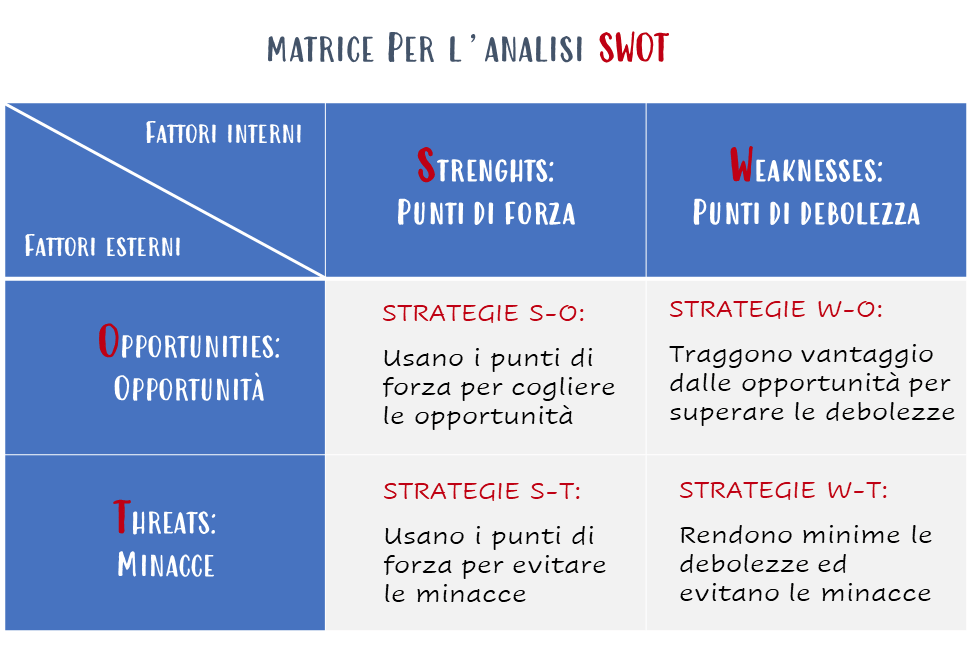
La matrice SWOT per la definizione di strategie aziendaliL’ analisi SWOT può essere sintetizzata in una matrice a quattro celle che aiuta a identificare e valutare i fattori critici che influiscono sull’attività dell’impresa e sul raggiungimento degli obiettivi aziendali. La lettura incrociata dei fattori SWOT sulla matrice permette di definire gli obiettivi aziendali e di stabilire come questi possano essere raggiunti. In termini generali, dalla matrice SWOT si deduce che gli obiettivi di marketing dovrebbero essere correlati con il matching tra i punti di forza dell’impresa e le opportunità dell’ambiente competitivo e con la conversione dei punti di debolezza interni in punti di forza e delle minacce esterne in opportunità. In maggiori dettagli, mettendo in relazione diretta i punti di forza e i punti di debolezza con le opportunità e le minacce, è possibile individuare quattro strategie di marketing da sviluppare o implementare per conseguire vantaggi competitivi o contenere l’impatto dei fattori di rischio. 1. Strategie S-O (Strengths-Opportunities): l’impresa deve far leva sui punti di forza del contesto interno per approfittare delle opportunità del contesto esterno. 2. Strategie S-T (Strengths-Threats): l’impresa deve far leva sui punti di forza del contesto interno per difendersi dalle minacce del contesto esterno. 3. Strategie W-O (Weaknesses-Opportunities): l’impresa deve proteggere temporaneamente (in attesa che siano migliorati) o eliminare (laddove possibile) i punti di debolezza per sfruttare al meglio le opportunità del contesto esterno. 4. Strategie W-T (Weaknesses-Threats): l’impresa deve sviluppare strategie difensive per proteggere i suoi punti deboli dalle minacce dei competitor o per impedire che le minacce (ad es. il lancio di un prodotto concorrente) limitino le capacità dell’organizzazione di soddisfare le attese dei clienti e si trasformino in punti di debolezza in grado di influenzare negativamente la customer satisfaction.
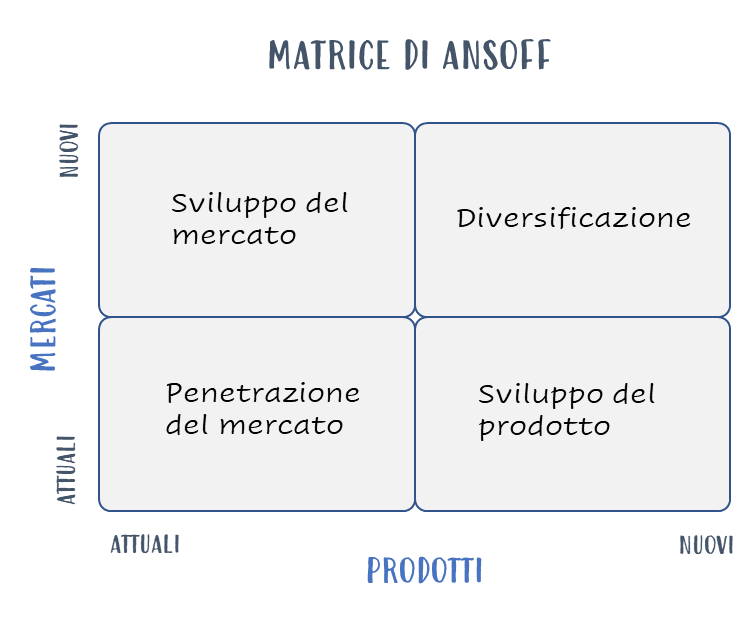
L’ analisi SWOT è un’analisi situazionale, poiché l’intento dei manager che la impiegano è anzitutto quello di fare il punto sulla situazione dell’azienda o del prodotto, ovvero quello di verificare il posizionamento attuale, come questo si sta evolvendo, quali strategie sono in essere per rispondere alle attese dei potenziali clienti e con quale efficacia (si tratta, in tal caso, di valutare la capacità della strategia adottata di conseguire i risultati attesi), quali sono i fattori esterni e le principali tendenze del settore. La sola analisi SWOT non è tuttavia un elemento sufficiente a configurare la posizione concorrenziale dell’impresa sul mercato. Tale analisi, per fornire informazioni compiute, deve essere messa in relazione con altre analisi strategiche riguardanti la concorrenza e il mercato. Le più utili, a tal fine, sono le c.d. matrici di portafoglio che presentano il vantaggio di descrivere il contesto competitivo secondo un criterio oggettivo (nella SWOT opportunità e minacce dell’ambiente esterno rappresentano fattori soggettivi). Le matrici di portafoglio hanno lo scopo di individuare la posizione dei prodotti aziendali in riferimento ad alcuni parametri oggettivamente misurabili o comunque in grado di definire chiaramente il contesto in cui l’impresa è inserita; ad esempio, la posizione di ogni prodotto può essere identificata nella matrice secondo la quota di mercato relativa e il tasso di crescita del mercato (matrice BCG) o il grado di novità di prodotti e mercati (matrice di Ansoff). La matrice di Ansoff: le principali strategie di sviluppoLe dimensioni della matrice di Ansoff sono i prodotti e i mercati che interessano nel presente e nel futuro l’azienda. Gli assi della matrice sono divisi in due parti: prodotti attuali-prodotti nuovi e mercati attuali-mercati nuovi (dove “nuovi” significa nuovi per l’azienda). Si ricavano così quattro quadranti, cui corrispondono altrettante specifiche strategie:
1. Strategie di penetrazione (prodotti attuali-mercati attuali). L’impresa mira ad acquisire, attraverso un’ottimizzazione del marketing mix, una posizione di leadership sul mercato. L’obiettivo dell’incremento della quota di mercato del prodotto può essere perseguito mediante politiche di prezzo (leadership di costo) e/o supportato da campagne pubblicitarie e promozionali volte a: aumentare la frequenza d’uso di un prodotto esistente o la quantità media utilizzata; influire sul modo in cui i consumatori lo percepiscono attraverso un riposizionamento, ad esempio, promuovendo nuovi modi d’uso del prodotto. 2. Strategie di sviluppo dei prodotti (prodotti nuovi-mercati attuali). L’impresa mira ad acquisire performance superiori in relazione a un’area dei benefici ricercati dai clienti. Le imprese attuano questa strategia migliorando le caratteristiche dei prodotti esistenti, oppure mediante l’introduzione di nuovi prodotti (in un’ottica, dunque, di line extension). Nell’azienda rimangono immutate le competenze e le capacità di marketing mentre viene sviluppato il know-how tecnologico, la ricerca e sviluppo, la produzione. È importante, perché questa strategia sia di successo, che l’area dei benefici individuata sia rilevante per un’ampia parte del mercato, e che al contempo sia basata sui punti di forza che caratterizzano l’impresa. Lo sviluppo del prodotto risulta un orientamento vincente quando vi sono degli elementi del marketing attuale che possono sviluppare effetti sinergici per i nuovi prodotti; ad esempio, la distribuzione avviene attraverso gli stessi canali, la forza vendita può essere subito utilizzata per la commercializzazione dei nuovi prodotti, l’immagine dei prodotti attuali può essere facilmente e credibilmente trasferita sui nuovi prodotti e così via. 3. Strategie di sviluppo dei mercati (prodotti attuali-mercati nuovi). Questa strategia mira a far crescere la domanda incrementando il numero di mercati in cui opera l’azienda. Una strategia di sviluppo dei mercati richiede un aumento delle competenze di marketing mentre possono rimanere inalterate le capacità di know-how produttivo. Le ragioni di una tale scelta strategica possono essere di vario genere; ad esempio, le ridotte dimensioni del mercato domestico che non sono compatibili con gli obiettivi di sviluppo e di economie di scala o ancora perché il prodotto è diventato obsoleto per mercati avanzati mentre è ancora in fase di introduzione o crescita in altri mercati più arretrati (v. marketing internazionale). 4. Strategie di diversificazione (prodotti nuovi-mercati nuovi). La strategia di diversificazione richiede lo sviluppo di nuove capacità commerciali e di nuovi processi produttivi e tecnologici; l’espansione, infatti, si fonda su nuovi prodotti e nuovi mercati. L’impresa percorre una strategia di diversificazione quando il settore in cui l’impresa opera non ha sufficiente attrattività o quando ritiene che non vi siano reali possibilità di rilancio di un’attività profittevole nel futuro dei propri prodotti nei mercati attuali. Chiaramente, il rischio connesso a questa strategia è molto alto; le decisioni che il management deve prendere per la diversificazione richiedono la soluzione di problemi assai difficili in quanto non vi è alcuna esperienza diretta e precedente del gruppo dirigente sui nuovi prodotti/mercati. Le altre strategie presenti nella matrice prodotti/mercati sono meno pericolose contenendo gradi minori di novità; ovviamente la più sicura è quella di penetrazione. |